
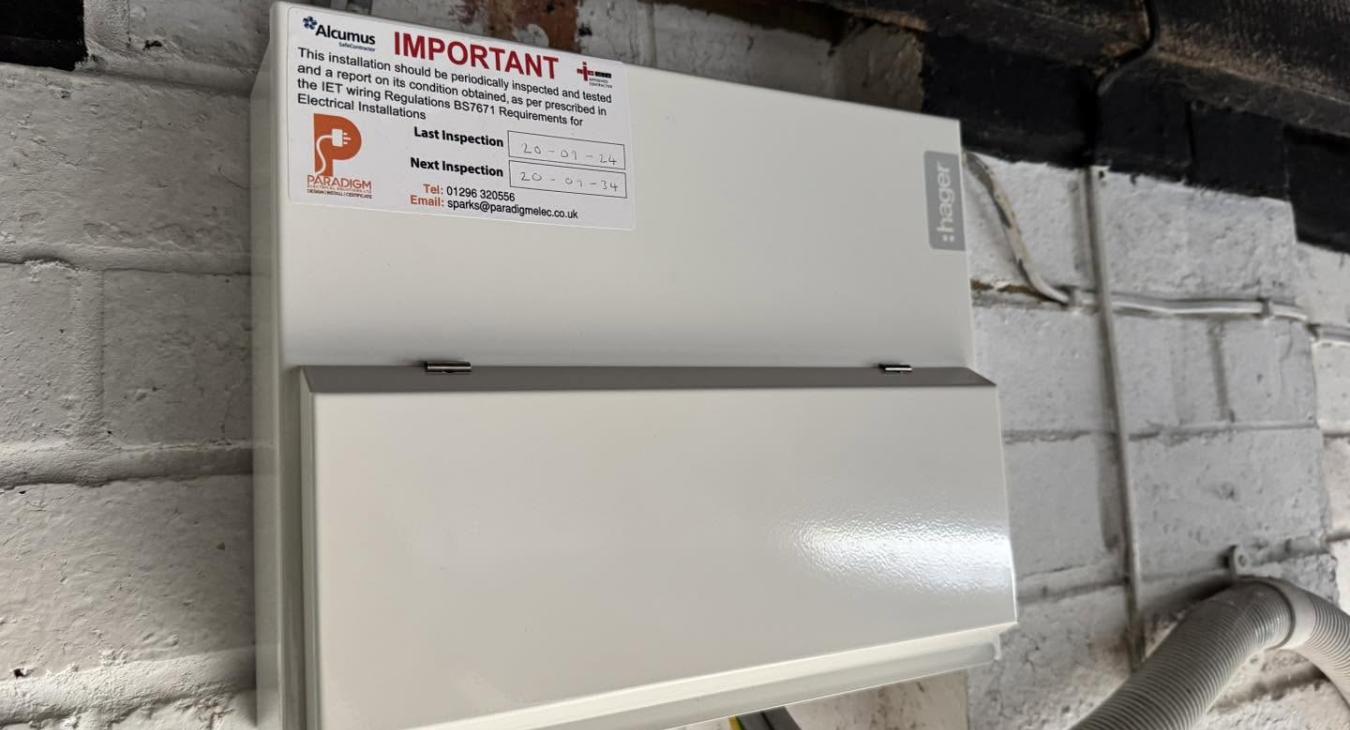
If your home still has a fusebox instead of a consumer unit, this is usually indicative of an outdated unit that often lacks modern day safety features and no longer lives up to current wiring regulations (BS 7671). Older fuseboards also tend to have rewireable fuses or colorful cartridges where the fuse lives - if you notice either of those features on your fuseboard, it’s most likely time for a fuseboard upgrade.
What are the main differences between a fuse box and a consumer unit?
Due to the rewireable fuses that an older fuse board has, if a fault is detected or a circuit becomes overloaded the fusewire will essentially burn out. This meant that in order to restore power after an event like this you would either have to locate or go to the hardware store for a new carrier fuse or hand re-wire the fuse. This process can become tedious and certainly not manageable in the event of a recurring tripping circuit. However, if you find that you’re experiencing tripping circuits on a regular occurrence, this is usually a sign that your fuseboard is faulty, too old or there is a fault occurring somewhere and it's certainly worth calling an electrician in and considering a fuseboard upgrade.
Modern consumer units feature some wonderful safety features and tools that not only make our lives easier, but much safer than the fuseboards of yesteryears.
Modern safety features include:
- RCD Protection (Residual Current Devices) - an RCD is a tool which is able to save lives by cutting power in sheer milliseconds should a fault or discrepancy be detected in the current.
- Metal Enclosures, rather than wood - many older fuseboards used to have wooden enclosures - which in the event of an electrical fire, isn’t going to be your friend. Modern day consumer units instead have metal enclosures to try and reduce the risk of fires and hazards.
- MCB Protection (Miniature Circuit Breakers) - MCBs are in place to offer protection for individual circuits. An MCB protects the circuit from overload or short circuits - the power will automatically trip if it's been detected that there is too much current flowing.
- RCBOs (Residual Current Breaker with Overload) - An RCB is a great feature as instead of losing power to a whole section of the house should tripping occur, you will only lose power to the specific individual circuit, avoiding nuisance tripping.
If you’ve got an older fuse box or your experiencing frequent tripping, it may be time to contact your local electrician and go ahead with a Fuse box upgrade Aylesbury.
A recent real life Fuse box upgrade Aylesbury
We recently attended a 3 bed 60's terraced home on Berryfield Road, Aylesbury. They were a young family who were moving into a new rental property. We had been contacted by their letting agent following on from an unsatisfactory EICR carried out a few weeks earlier, the existing MEM (old style) fuseboard was outdated and lacked the level of protection expected under current safety regulations. The letting agent wasn’t sure what the difference was between a fuse box or a consumer unit, we explained how older fuse boxes work vs the inner workings and intricate safety features of a consumer unit - safe to say the letting agent went home and had a look at her own unit later that evening to see if hers was safe!
We carried out the fuseboard upgrade in the property, rectifying the issues raised on the EICR regarding the fuse box. Offering both the tenant and the landlord peace of mind that the home's electrics are safe and fit for purpose.
Looking for an electrician for a fuse box upgrade in Aylesbury?
If your fuse box is outdated or simply worn or faulty and it’s time for an upgrade, contact Paradigm Electrical Services - your local Aylesbury NICEIC Domestic Installer. We’d love to help make your home electrically safer.
- Log in to post comments


